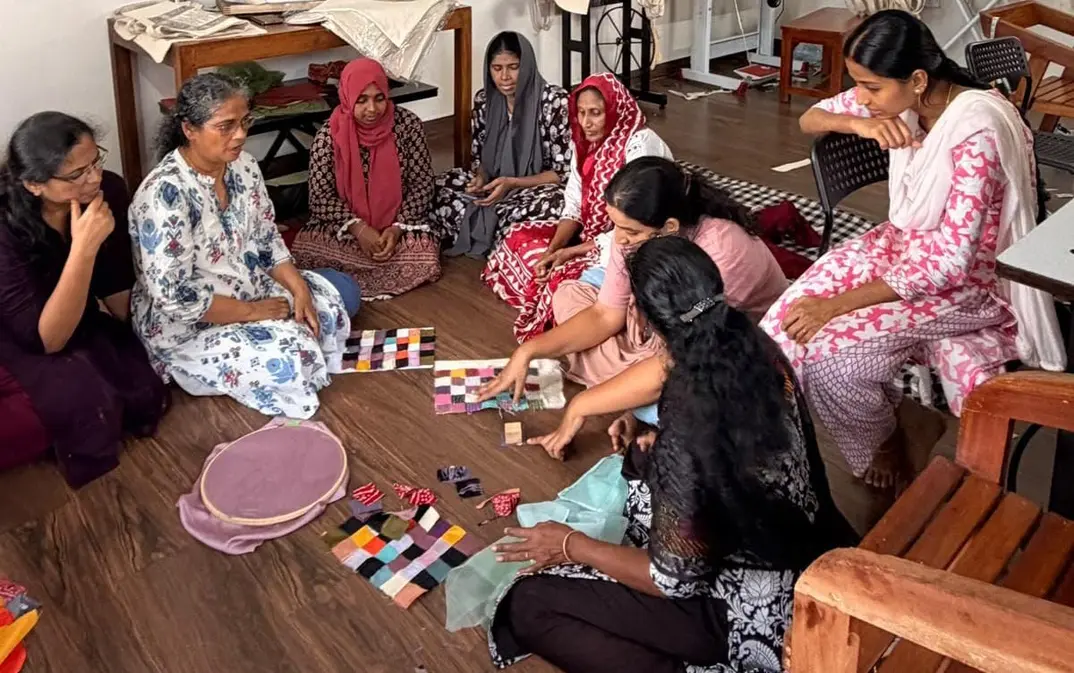
The Constitution Tote
We, the people. Still at work.
The promise India made to every one of its people, carried on a bag made by many of them.
Certified & registered
- India Handloom Brand
- Handloom Mark
- Make in India
1946 – 1949
A country, written by its people
After independence, 299 people sat in one room for almost three years to write down what India would promise its citizens. They were Hindus, Muslims, Sikhs, Christians and Parsis. There were Dalit and Adivasi members, and fifteen women. They argued, disagreed and kept going.
- 1
- Dr B. R. Ambedkar, a Dalit, who chaired the committee that drafted it
- 15
- women among them, including Dakshayani Velayudhan from Kochi, the only Dalit woman in the Assembly
- 299
- members of the Constituent Assembly, from different faiths, castes, regions and beliefs
And then, by hand
Even the paper was made by many hands. The final copy was not printed. The calligrapher Prem Behari Narain Raizada wrote every page by hand and asked for no payment, only the right to sign his name. Artists from Santiniketan, led by Nandalal Bose, painted the borders. The Preamble page was illuminated by Beohar Rammanohar Sinha, and its border is the one on this bag.
Why the Preamble
The whole Constitution, in one page
The Preamble is where the Constitution says who it belongs to (We, the people) and what it promises every one of us: justice, liberty, equality, and fraternity between people who are not alike. Everything after it is detail.
We thought it deserved to be carried to the market, on the bus, into the classroom, and to be read over someone's shoulder.
Then we asked: what if the bag was made the way the words were? By many hands, from many communities, each one counted.
This bag is.
How it's made
Thread, weave, stitch
The cotton is spun in Tamil Nadu, woven in Chengamanad and stitched in Fort Kochi.
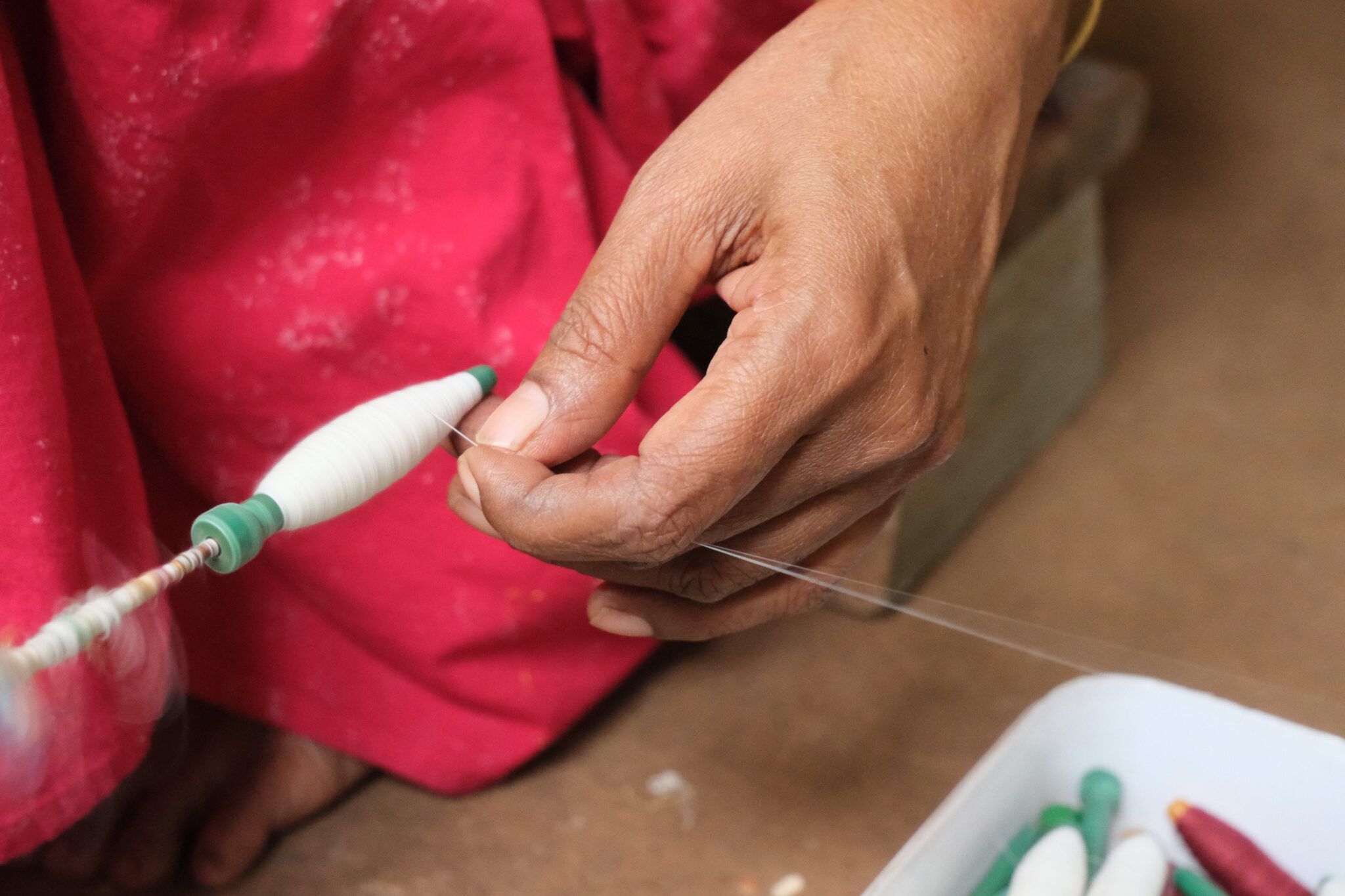
I / Nagercoil & Kannur
The thread
It starts as fine cotton thread from some of the oldest mills in South India. Before it reaches a loom, every strand is wound by hand onto a bobbin.
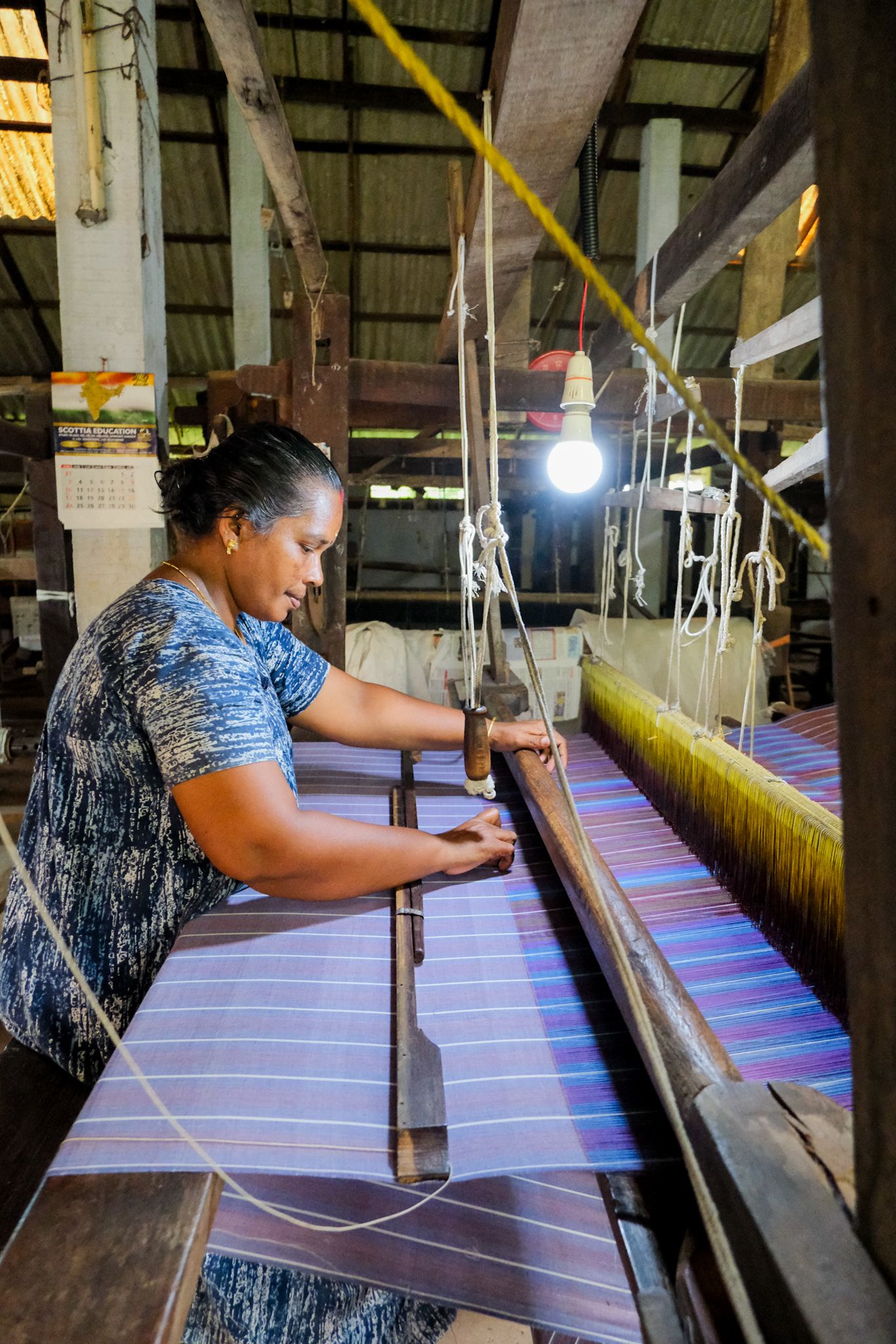
II / House of Kasavu, Chengamanad
The weave
Thirteen women of the Pattariyar community weave the cloth on wooden handlooms, carrying on a 70-year-old tradition. They are among the last of a community that once lived by this craft, and they have chosen to keep it alive.
“We continue because we refuse to let go of the only art we know.”
III / aikyam space, Fort Kochi
The stitch
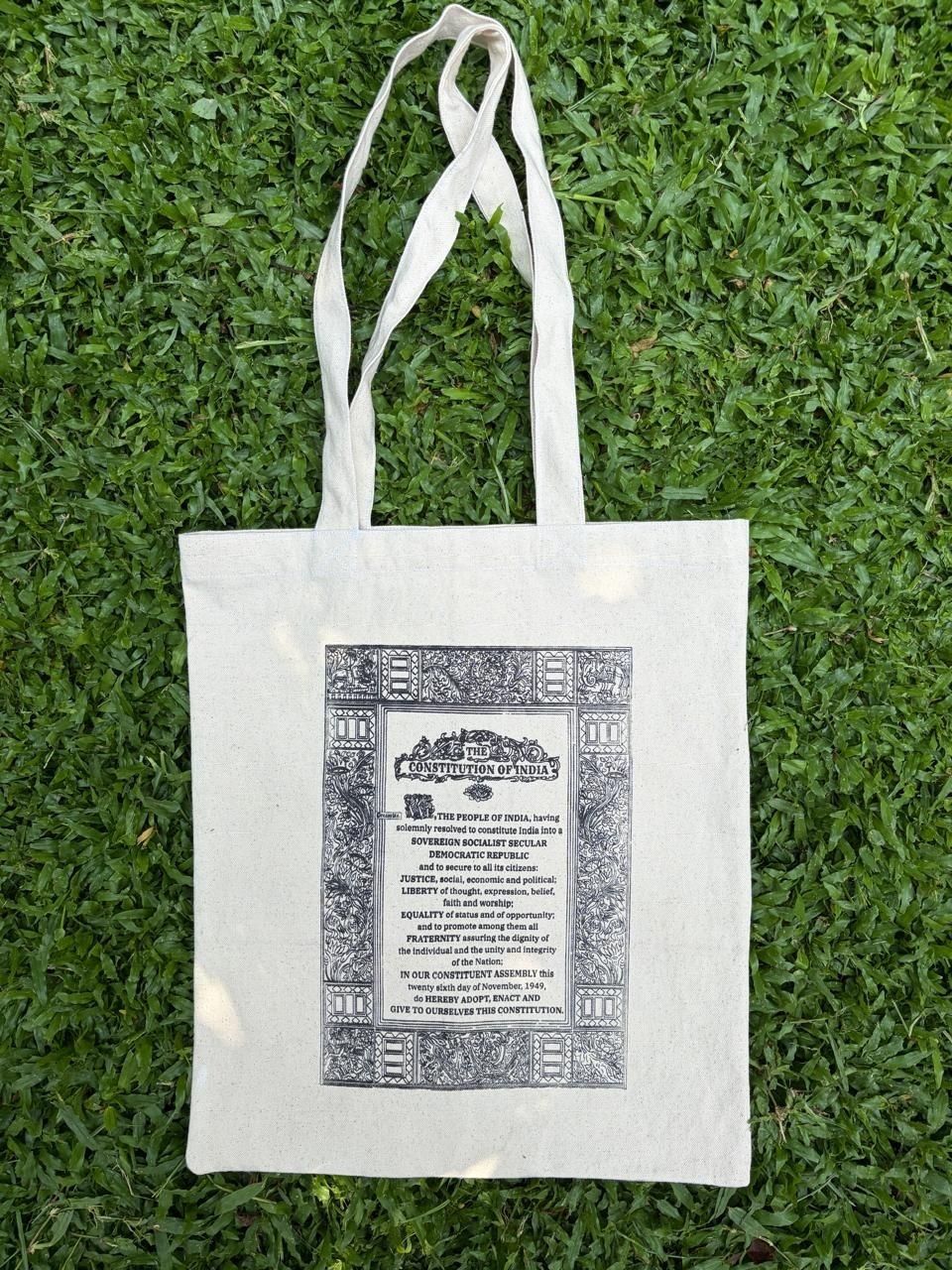
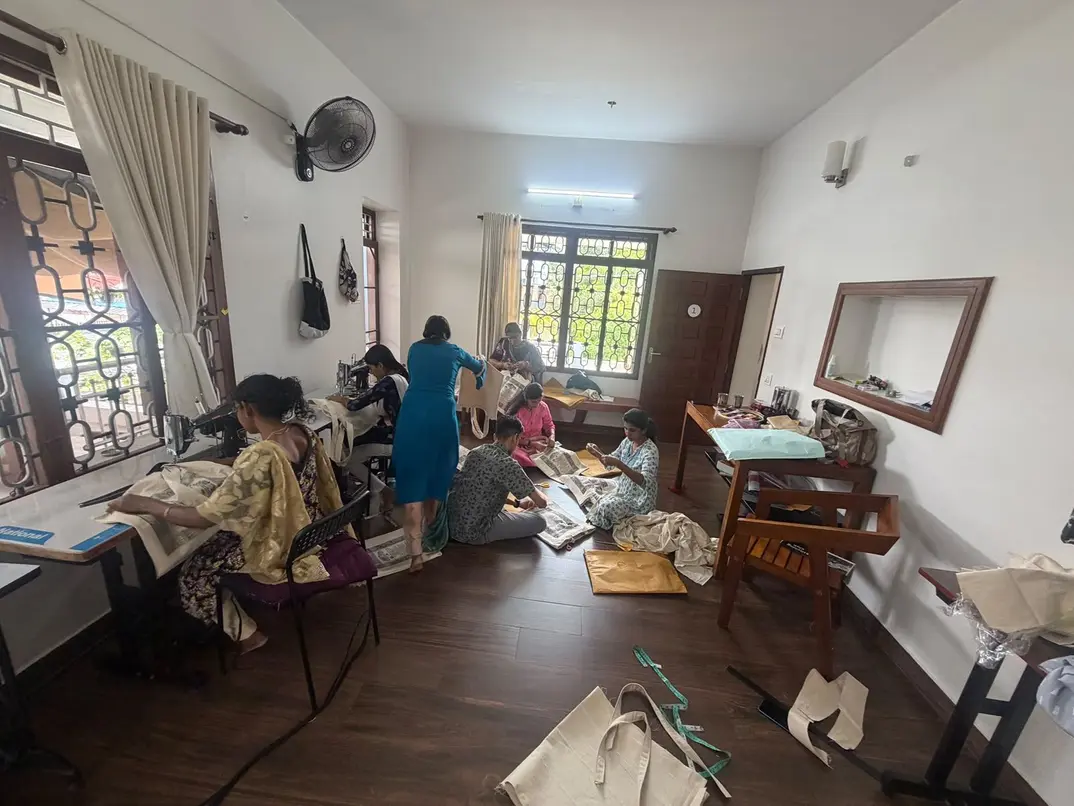
In Fort Kochi, the cloth reaches the free Stitching Club at aikyam space. Its teacher, Mary Gracy, came with years of tailoring and little belief that she could teach. Now women of different faiths learn from her, then cut, stitch and check every bag themselves.
“At first, I didn't know how to stitch. Today, I made this bag on my own.”